Stone guide
Warm-toned stone for a fall kitchen: cream, taupe, gold and charcoal
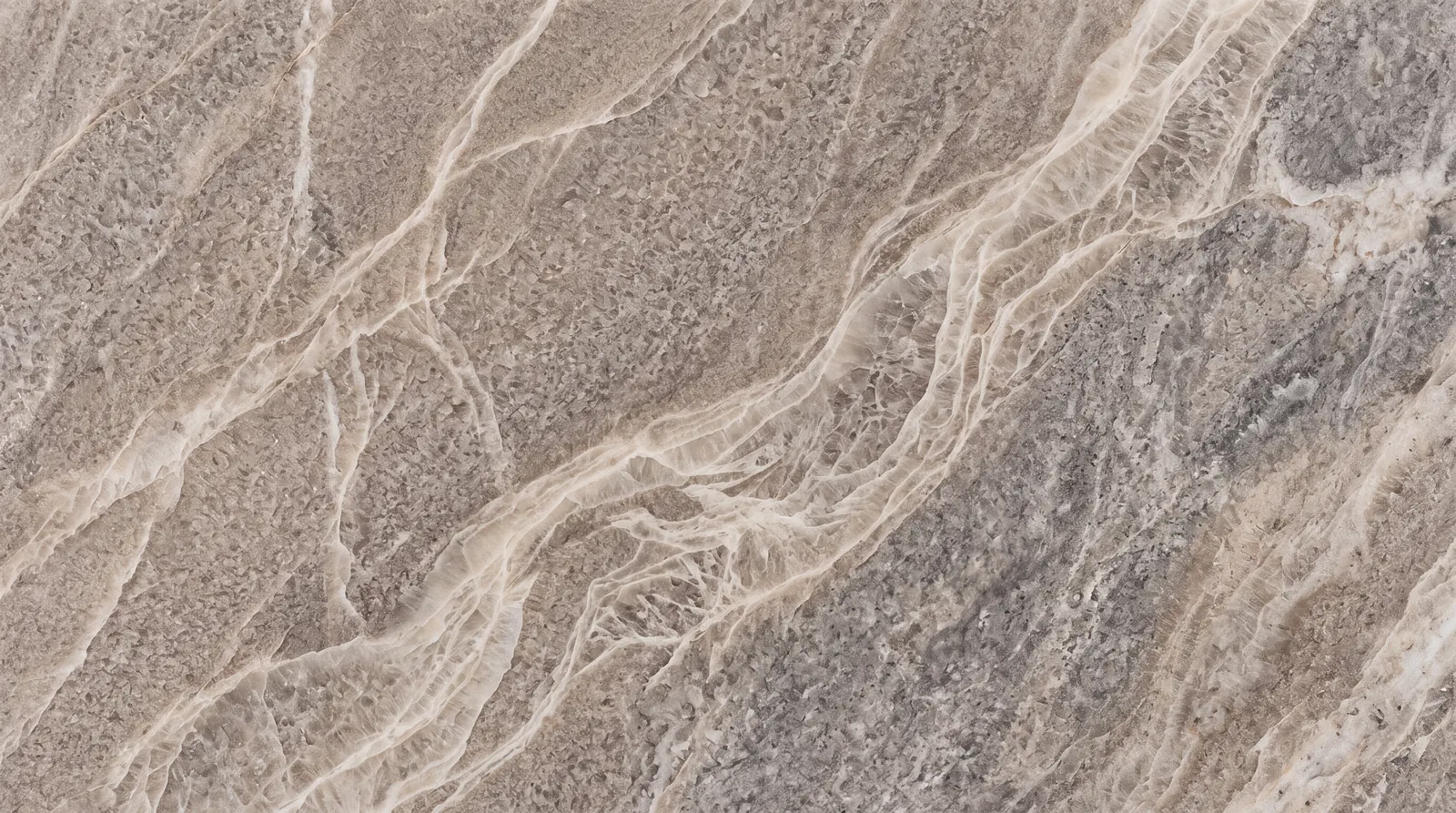
Warm kitchens look most settled when the countertop commits to one color family: cream, taupe, gold or charcoal. Each family has its own short list of natural stones and quartz patterns, its own cabinet and hardware partners, and one habit you should know about before you approve a slab.
Fall is a good time to sort this out. Many homeowners start choosing materials now for a winter or spring remodel, and warm palettes come up often in those early decisions. The table gives the quick version. The sections below go palette by palette.
| Palette | Natural stone to look at | Quartz patterns | Cabinet tones | Hardware |
|---|---|---|---|---|
| Cream | Warm white quartzite, cream marble, cream-ground granite | Warm white with beige or gold veining | Ivory, warm white, white oak, walnut, sage | Aged brass, polished nickel |
| Taupe | Gray-brown quartzite, banded taupe stones | Greige solids, soft veining, concrete looks | Greige, mushroom, rift oak, deep green | Brushed nickel, champagne bronze, matte black |
| Gold | Gold granite, gold-veined marble and quartzite | White with gold veining | Navy, forest green, cream paint, cherry | Antique brass, oil-rubbed bronze, copper |
| Charcoal | Soapstone, black and dark gray granite | Charcoal concrete looks, black with fine veining | White oak, walnut, warm white, terracotta | Unlacquered brass, copper, matte black |
Cream: light, soft and forgiving
Stones and quartz patterns
Cream sits between white and beige. Among natural stones, warm quartzites are the obvious starting point. Taj Mahal is a widely sold example, known for an off-white base with soft tan and gold movement. You can read more about the material on our quartzite countertops page. Cream marbles such as Crema Marfil fit here too, with the usual marble tradeoff: acids like lemon juice, vinegar and wine can etch the polish. Some granites also carry cream backgrounds with brown, gray or burgundy flecks.
In quartz, the cream family usually means a warm white base with beige or gold veining, often sold as calacatta-style patterns. Trade names change from one supplier to the next, so judge the slab in front of you, not the name on the tag.
Cabinets and hardware
Cream works with ivory and warm white paint, natural or white oak, walnut, and muted greens like sage or olive. For hardware, aged or unlacquered brass adds warmth, and polished nickel keeps things a little brighter.
Taupe: the in-between neutral
Stones and quartz patterns
Taupe falls between gray and brown, which makes it one of the easiest warm colors to pair. Many quartzites land here, with gray-brown bases and flowing veins like the stone in the photo at the top of this page. Fantasy Brown is a common banded stone in taupe, cream and gray. It is often classified as a dolomitic marble, though some sellers list it as quartzite.
Quartz in this family includes greige and mushroom solids, soft-veined patterns and concrete-look surfaces with a warm cast.
Cabinets and hardware
Taupe suits greige, putty and mushroom paints, rift-cut or white oak, and darker accents like forest green or painted black. Brushed nickel, champagne bronze and matte black all sit comfortably with it.
Gold: the warmest of the four
Stones and quartz patterns
Granite is where gold shows up most. Names like Giallo Ornamental, Santa Cecilia and Venetian Gold describe warm gold, tan and brown grounds with darker specks. Our granite countertops page covers the material in more depth. Gold also appears as veining: Calacatta Gold is a white marble with gold-toned veins, and some quartzites carry golden movement that bridges the cream and gold families.
In quartz, gold usually arrives as veining on a white or warm white base. Solid gold quartz is uncommon.
Cabinets and hardware
Gold looks rich against deep colors such as navy and forest green, and it softens beside cream paint. Cherry and walnut lean into the warmth. Antique brass, oil-rubbed bronze and copper are natural partners.
Charcoal: dark, and warm in the right company
Stones and quartz patterns
Charcoal is not warm by itself, but it grounds warm woods and brass better than any of the other three. Soapstone is the classic choice: gray to charcoal, smooth to the touch, and darker when treated with mineral oil. It is softer than granite and can scratch, though light scratches are commonly sanded or oiled out. Dark granites such as Absolute Black and Steel Grey belong here too, and a honed or leathered finish gives them a softer look than polish. A few dark quartzites with white veining also fit.
Quartz options include charcoal concrete looks and black bases with fine white or gray veins.
Cabinets and hardware
Pair charcoal with white oak, walnut, warm white paint, or earthy colors like terracotta and olive. Unlacquered brass and copper bring the warmth. Matte black hardware gives a quieter, more monochrome result.
Seeing samples in your own kitchen
Color decisions go best when every finish is in the same room under the same light. Gather a cabinet door or paint chip, a hardware sample and any backsplash tile, then compare them against stone samples in the kitchen where they will live.
Our process runs from consultation and material selection through free in-home measurement, fabrication and installation. Estimates are free, with no obligation. Questions about removing old tops, reconnecting sinks or fitting the project around your schedule are good ones to raise during that estimate. You can contact us Monday to Friday, 8:00am to 6:00pm, from anywhere on the Front Range between Colorado Springs and Fort Collins.